

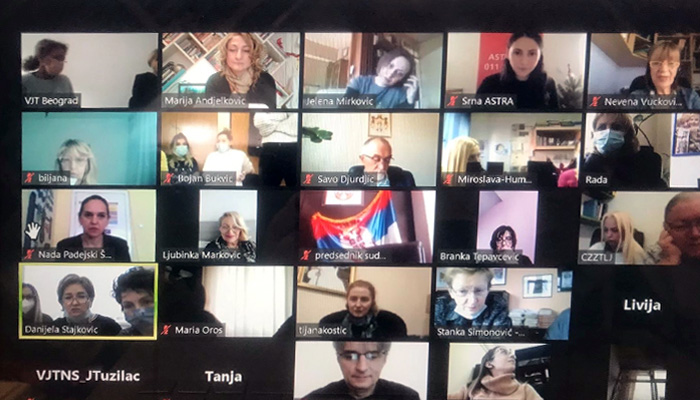
On January 29, 2021, ASTRA conducted the first of the two thematic events with key judicial and child protection stakeholders on “Position and Rights of Child Victims in Criminal Proceedings”.
Initially planned round table was supposed to gather 20 participants but, due to unprecedented interest, ASTRA received almost 200 applications and decided to expand the event`s format into a conference. Among 150 participants, majority came from the social protection system. Most of them, mainly social workers, but also psychologists, legal professionals, special pedagogues and defectologists, work with children and youth. Other institutions represented at the conference were the Centre for Trafficking Victims’ Protection, Shelter for Children of Belgrade, Safe House for Victims of Domestic Violence (and their children) from Novi Sad and the Centre for Protection of Infants, Children and Youth from Belgrade. The participants from the justice sector included judges from several high courts and prosecutors from the basic and high public prosecutor’s offices. In addition, professionals who took part in the event came from ASTRA’s network of lawyers, high courts` victim support service, academia as well as non-governmental human rights organizations working mainly on child protection issues, women’s rights, and anti-trafficking.
The first panel addressed the compliance of Child Friendly Justice (CFJ) international standards with the current judicial practice in Serbia. The second one focused on participation of child victims in criminal proceedings and current practice and challenges from three different perspectives: judge’s, public prosecutor’s, and psychologist`s who provides support to children participating in criminal proceedings.
The first panelist, Prof. Nevena Vučković Šahović, PhD, presented the international legal framework setting forth the main CFJ principles. She shared with the audience some of the CFJ best practices in specific European countries where CFJ principles are applied and what steps should be taken to achieve that level of implementation in Serbia.
The second panelist, ASTRA`s legal consultant Tanja Drobnjak, shared with the participants the findings and recommendations based on the review ASTRA conducted in summer 2020 of 2019 court rulings issued after judicial proceedings involving children. She shared data collected on criminal proceedings in which children were victims and/or witnesses and noted lack of awareness of many professionals on the need to meet the special needs of vulnerable individuals (that children always are).
The judge of the Novi Sad Appellate Court, Mr. Savo Djurdjić, who has been adjudicating juvenile justice cases for more than 15 years, delivered the presentation “Judicial Practice in Serbia in Criminal Proceedings with Children as Victims and Witnesses”. He pointed out the need to implement consistently the 2006 Law on Juvenile Delinquents and Protection of Juveniles in Criminal Proceedings that provides a solid framework for protection of child rights before and during trials and expressed hope that Law is to be amended soon to correct remaining inconsistences with international standards.
The fourth panelist, Deputy Public Prosecutor at the Higher Public Prosecution Office in Novi Sad Ms. Mirjana Vujičić, shared with the participants some good practices and challenges from the Prosecutor’s perspective, emphasizing the need for further training of professionals who work directly with children participating in criminal proceedings.
The last panelist, psychologist Ms. Ljubinka Marković, Advisor on the Minors` Rights in Criminal Proceedings at the Higher Court in Belgrade presented the practices in providing psychological support to child victims and witnesses in trials at that Court.
After the panelists` presentations, the participants shared their experience and asked questions of interest for their everyday practice. The event was closed with the announcement of additional opportunities within the framework of CRIS project to meet and discuss various topics related to the implementation of CFJ principles in Serbia and steps that should be taken to improve the position of children involved in criminal proceedings.